An online knowledgebase for trained appropriate adults in NAAN member schemes. Practical information and guidance that integrates legislation, case law, policy and best practice all in one place, available 24/7.
An online knowledgebase providing practical information and guidance on achieving effective AA services for children and/or vulnerable adults that meet the national standards. This includes resources to support your AA training.
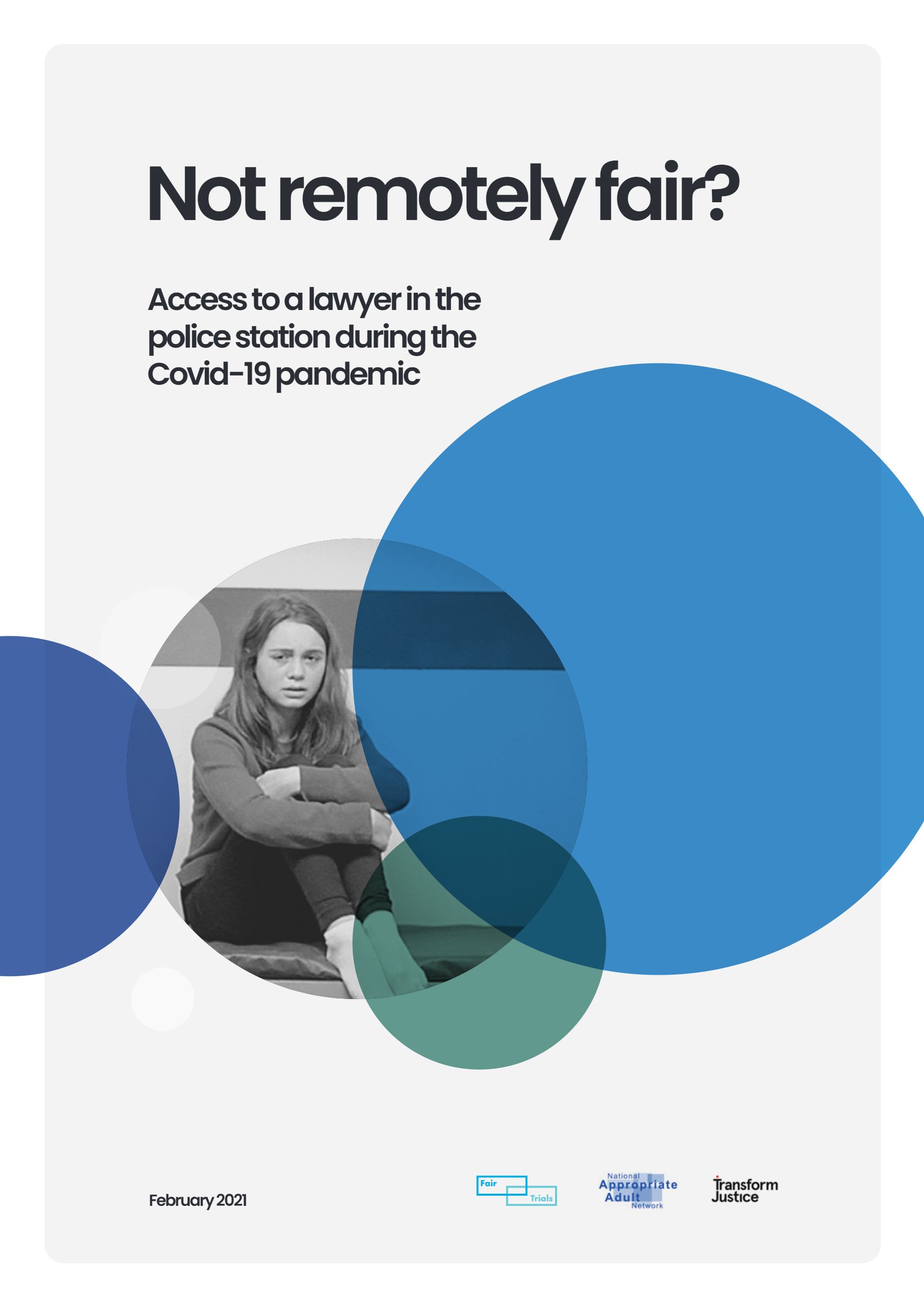
'Not remotely fair?' was launched on 26th February 2021.
A report from Transform Justice, National Appropriate Adult Network and Fair Trials International, it explores the impact of the emergency response to Covid-19 on people interviewed in police custody, and in particular on children and vulnerable adults.
Chief executive of the National Appropriate Adult Network, Chris Bath
“The Covid-19 response to police interviews was well-intentioned but in practice has not delivered a fair process for children or for people with a learning disability, speech and language need, autism, mental illness or brain injury.
While those in police custody have benefited from the continued in-person support of appropriate adults throughout the pandemic, this is no substitute for the invaluable physical presence of a lawyer. Children and vulnerable adults make up only 9% and 5% of arrests respectively. Given this new evidence, it is not logical or proportionate to ignore the existing rules that their legal advice should always be in person. Miscarriages of justice and failed prosecutions serve neither suspect nor victim.”
Director of Transform Justice, Penelope Gibbs
“Those detained in police custody have been imprisoned by the state. It is a deeply stressful experience which renders all detainees vulnerable. We need to ensure that all detainees, especially children and vulnerable adults, are able to access legal representation and to have fair treatment in custody. Our survey suggests that suspects are sometimes being shortchanged due to Covid safety measures. But justice should not and does not need to be compromised.”
Deputy chief constable Nev Kemp, the National Police Chiefs’ Council lead for custody
"The pandemic meant forces had had to adapt and balance keeping everyone entering custody safe while ensuring they still played their role in the criminal justice process. Whilst we recognise that there may be some reluctance by legal representatives to return to custody centres routinely, they are entitled to the same level of protection and PPE as custody staff and this will be provided if required free of charge.”
Chief executive of Fair Trials, Jago Russell
"The implications of the pandemic on our over-stretched and ill-resourced criminal justice system will reverberate for years to come. One question the courts are going to have to grapple with is whether they can rely on incriminating statements that were given in police interviews over the past year where solicitors gave advice over the phone or by video call. In the past, miscarriages of justice have been caused by the failure to protect suspects in the police station which is why people have the right to in person legal advice free of charge. We need lawyers back in police stations as soon as possible to ensure that this important right is protected."
Police and crime commissioner Martyn Underhill, APCC deputy lead for mental health and custody
“Unfortunately, adherence to the JIIP has varied and today's assessment is consistent with reports made by Independent Custody Visitors (ICVs) to PCCs and ICVA, describing how detainees had not been given a chance to provide informed consent to agree to remote legal advice. ICVs also expressed concern that detainees and appropriate adults were often presented with a situation whereby remote legal advice became the default. As a result of ICV reports and today's findings, I understand the NPCC and other signatories to the JIIP have developed new guidance that clearly sets out the correct process to obtain detainee consent. In addition, the NPCC has called for children and vulnerable adults to be removed from the Protocol meaning they will always receive legal advice in person. I support this approach and continue to urge ICVs to monitor this situation and report concerns to PCCs. As we move forward, I will work alongside the NPCC to oversee the effective implementation of the new guidance and eventual phase out of the JIIP.”
Katie Kempen, chief executive, Independent Custody Visiting Association
"This report further outlines these deeply worrying practices, which leave vulnerable detainees without in-person legal advice, including those suspected of serious offences. In a society that values fairness and the rule of law, this situation cannot continue. To protect access to justice, solicitors should return to providing in-person advice safely in COVID secure custody suites.”
The report led to discussions between the signatories to the Joint Interim Interview Protocol that supported remote legal representation. The report's authors also wrote to Minsters, and held several meetings with some of the key decision makers and Government officials.
The signatories agreed to end the use of remote legal representation in cases involving children and vulnerable adults.
On 17th May 2021, in line with Stage 3 of the Government's roadmap out of lockdown, a revised version of the protocol was published. This explicitly removed all people for whom an appropriate adult is required.
This means children and vulnerable adults will only receive legal representation in interviews from a lawyer attending in person.
The protocol still applies to all other people. NAAN remains concerned that many vulnerable people will still be affected due to the low rate of identification of vulnerable people, as highlighted in ourThere to Helpresearch series.
The pandemic had a huge impact on children and vulnerable adult suspects, and the work of appropriate adults.
This page explains our perspective on the impact of Covid-19 and what we did to mitgate the impact of the pandemic on children and vulnerable adult suspects.
The challenges
Demand for AAs
Demand for AA services in most areas reduced significantly in the early stage of the pandemic, especially for children. This reflects national police guidance around the necessity of arrests and detention and a general downturn in crime. However, some members report that in their areas did not seen meaningful reductions. As the pandemic continued, custody only saw a small overall drop in numbers, with volumes quickly returning to normal.
Availability of AAs
Many schemes suffered dramatic reductions in the availability of their AAs. Volunteers make up a huge percentage of the AA workforce. Many of these people are older and a more likely to have underlying health conditions. As a result, many have had to self-isolate or shield. In response, some YOTs (who are under a statutory duty to ensure provision for children) have turned to their staff to maintain a service. Provision for adults, as always, more difficult due to the lack of statutory provision. However, AA schemes remained operational throughout the pandemic. This is due to the dedication of coordinators, staff and the many volunteers that continue to attend despite the risks to them and their families.
Changes in provision of legal advice
In response to Covid-19, a joint interim interview protocol was agreed by the CPS, NPCC, Law Society, CLSA, and LCCSA in March 2020. This advocated the delivery of remote legal advice and interview support by legal representatives as temporary measure in extremis to cope with an unprecedented public health crisis. This led us to respond to three issues:
The joint protocol did not mention children, vulnerable adults or AAs. Therefore, it did not take account of the special circumstances of these individuals, negative impacts on fairness and appropriate safeguards.
In June, the Home Office launched an expedited public consultation on amending the PACE Codes to allow remote legal representation for a period of one year.
It later became clear that the protocol had been poorly implemented and that remote legal advice presented a serious risk for children and vulnerable people, as well as to the integrity of the justice system.
Our acitivities on this issue included:
In March 2020, we raised with signatories to the joint protocol, that it did not mention children, vulnerable adults or AAs.
In July 2020, we submitted adetailed submissionto the Home Office raising concerns about the potential impact of remote legal advice on suspects for whom an AA is required under PACE. NAAN has continued to make strong representations in policy discussions with the Home Office and partners following the consultation.
In April 2020, a revised version of the protocol was published, to which NAAN contributed. This included safeguards for children and adult vulnerable suspects, such as the requirement for police to secure the consent of the person's appropriate adult before remote legal representation in interview may take place.
Following the publication of our joint report, the signatories agreed to end remote legal advice for children and vulnerable people from stage 3 of the roadmap out of lockdown (17th May 2021).
AA schemes across the country continued to attend custody to support children and vulnerable adults. This was ultimately a local decision for every area. But NAAN's early guidance was that appropriate adults should continue to attend custody, subject to three requirements:
Detentions/procedures are necessary (cannot be delayed or avoided)
Appropriate PPE is provided to AAs by police whenever it is needed
The custody environment is being run in a safe manner
If any of the three requirements are not met, the AA should decline to attend or remove themselves from custody. Our rationale for this position is as follows:
Ouranalysis of the PACE Codes makes it clear that core detention and interview related procedures cannot take place without an AA present and remain compliant with PACE
Given the nature of the children and vulnerable adults being supported, and the requirements of the AA role, physical presence is critical to achieving the outcomes of the role
Between March 2020 and May 2021, when legal advice and interview support was commonly being provided remotely, the physical presence of the AA is even more important in safeguarding rights and interests.
The police have a legal duty to take reasonable measures to ensure, so far is as reasonably practicable, that custody suites are safe and without risks to the health of AAs.
The three requirements reflect national guidance to police forces by the NPCC
AA schemes have a legal duty to adopt policies which protect their AAs where police have not taken reasonable measures
While there were some early issues, it appears that in most areas the three requirements are now typically being met. We have continued to monitor the situation and provide local support.
Virtual remand hearings
The use of virtual remand hearings (where people remain at the police station and are dealt with via video link, rather than attending court) is expanding.
The process was used with children and vulnerable adults. This raised questions about risks to fairness and effective participation.
AAs do not have a role in virtual courts. At this point the person has ceased to be a suspect held under PACE and has become a defendant. However, a number of NAAN members reported being asked by police to provide support to children and vulnerable adults.
This role is outside that of an AA and has not been defined. If attending physical court, a child would have the support of a YOT court support officer, as well as access to other services. The question of support for vulnerable adults remains open.
NAAN raised the issue with the Ministry of Justice.
Our response
In March 2020, we immediately set aside our work plans to focus on mitigating the impact of the pandemic on children and vulnerable adult suspects.
This included three interlinked approaches:
1. Listening
While we were unable to run our normal professional development days, we have continuined to engage with our members via:
We have also been providing regular e-updates direct to our member schemes.
3. Representation
Coronavirus has shown us all how interlinked we are. It is now clear how critical each part of the justice system is to each other and the whole.
Since the pandemic began, we have been extremely glad of the network of contacts we’ve built up over the last few years. In fact, this network has developed even further. This has made NAAN well placed to ensure that AA work, and the children and vulnerable adults they support, are included in national responses.
Our representation work has included:
Weekly engagement with organisations critical to police custody, via a Home Office chaired operational partners group
Providing advice to the Crown Prosecution Service on amendments to the joint interview protocol, ensuring the needs for children and vulnerable adults to have an AA physically present are recognised
Direct engagement with other organisations including various police forces, Youth Justice Board, Association of YOT Managers, Youth Justice Legal Centre and the Standing Committee on Youth Justice.
You'll find information about our current vacancies on this page.
Staff
We do not currently have any staff vacancies.
Volunteers
We do not currently have any specific vacancies.
However, if you feel you have skills to contribute at the national level (e.g. fundraising, professional advice, research, impact reporting), we'd love to hear from you.
Please emailThis email address is being protected from spambots. You need JavaScript enabled to view it. and let us know what it is you'd like to contribute
Thank you for your interest in NAAN. Before you get in touch, as a small charity, we'd be grateful if you could first check whether the information you need is on our website.
by bank transfer (the details will on the invoice)
by credit or debit card (click Debit or Credit Card below)
Please do not pay until we have asked you to pay. If the Board does not accept you application, we will refund your fee. However, we are unable to refund the fee for other reasons once paid.
Make a payment
NAAN Membership - 1 year
National training course - 10 month payment plan
Written on .
Technical support for online events
On this page we'll add information to help you join and participate in our online events.
We use a number of different platforms for different events. Check which platform we're using for the event you are attending, then click below.
When you are ready to join, click the link (we strongly recommend you check this works as soon as you get the link).
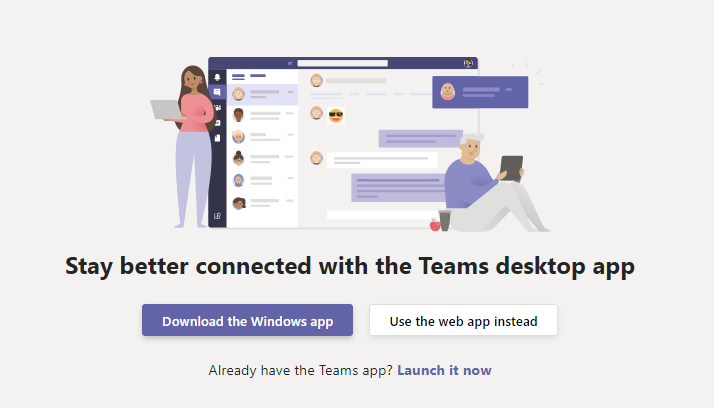
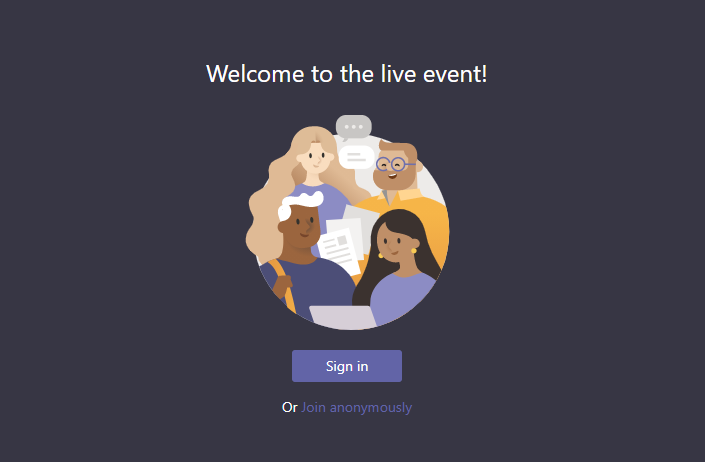
Depending on your set up, you might see different options, such as "Open Teams", "Download the app" and "Watch on the web instead"
Do I need to download anything?
There are two ways to access Teams Live Events: using the Teams App or via a web browser.
If you have the Teams app already, or download it before the event, you will be able to join the event using the app
If you don't have the Teams app installed on your device, you may be prompted to download it or simply join via the web
In most cases, you don't need to have the Teams app installed - but if you have an Apple device (e.g. MacBook, iPad, iPhone) you should check the table below.
If you can get the Teams app and it works fine when you test it, this may be better than joining via the web.
Which web browsers can I use?
Microsoft recommends:
Microsoft's own browser Edge (make sure you have the latest version - we have tested it)
Google's browser Chrome (make sure you have the latest version - we have tested it)
Microsoft says Apple's browser Safari is not currently supported. We tested this on an old MacBook and had a lot of problems. It does not work at all on iPads and iPhones (see chart).
What devices can I use?
You can access the event via a computer, phone or tablet - but we recommend joining the event via a computer if you can
There can be problems with some older Apple devices - if you have tested and are having problems, check the table below.
How can I be sure I'll be able to join?
Have a test run as soon as you get your link to join the event - if you join successfully you will be informed that the event has not started yet
Join the event early in case you have any technical difficulties
What if I have tried everything on this page and I am still having problems?
Email This email address is being protected from spambots. You need JavaScript enabled to view it.
We can't promise to solve all problems but we will try if we can.
Known issues with Teams Live Events
Users who already have a Microsoft 365 / Teams account are uanble to access the event when logged in
Some users have reported that they are unable to join the event via the link provided, if they are logged in to their Microsoft account. Some have reported that when tryong to join the event it would not accept their Microsoft Teams login details. We think this may particulary affect you if you have a work Microsoft account.
We have asked Microsoft Support about this issue. They advise that thos should work but it may be that a user's own organisation has 'locked down' their account, preventing them from using it to join events outside their own organisation. This may be for data protection reasons.
Microsoft advises that if this is the case, you try the following:
Log out of the teams desktop app before clicking the link to join the meeting, or alternatively
Join via the web app and (instead of logging in) select join anonymously.
The key message is, if you have a work account for Teams, log out of it before you try to join the NAAN Teams event.
Users with some older Apple users cannot join the event
Due to feedback from users, we've identified that some Apple (iPhone, iPad, MacBook) users may have difficulties accessing Teams Live Events.
Microsoft states Safari (Apple's default web browser) is not currently supported.
We have done extensive testing (results below) and found that there is a particular issue with older iPhones and iPads that are not running iOS 12 or higher. You can check whether your device can be updated here.
Device
Operating system
Way of joining
Problems
Solution
Apple Laptop
OSX
Teams app
None
n/a
Apple Laptop
OSX
Safari browser
(no Teams app)
Some problems – unreliable. Loads sometimes but then hangs
Download Teams App
Apple Laptop
OSX
Chrome browser
(no Teams app)
None
n/a
iPhone (newer)
iOS 12 or higher
Teams app
None
n/a
iPhone (newer)
iOS 12 or higher
Safari browser
(no Teams app)
Error: “Safari cannot open the page because the address is invalid”.
Click link to download teams app
iPhone (older)
Below iOS 12
Not tested. See iPad (older) Below iOS 12 below.
iPad (newer)
iOS 12 or higher
Safari browser
(no Teams app)
Error: “Safari cannot open the page because the address is invalid”.
Click link to download teams app
iPad (newer)
iOS 12 or higher
Teams App
(you already have it and have signed in before with an account)
None
n/a
iPad (newer)
iOS 12 or higher
Teams App
(you have just downloaded it for the first time)
It should give you the option to join as guest, and then ask your name.
But if you open the app by clicking on the event link, it might not take you to the event and instead ask you to set up an account first.
Set up the app before clicking the link.
You can setup an account if you wish.
But if you don’t, when you click on the event link you should be given the option to “join anonymously”
iPad (older)
Below iOS 12
Teams app
The App Store will not let you download the app unless you first update your iOS.
Is it not possible. Cannot download the App.
Update iOS if possible (should be possible if iPad is from 2017 or later)
If it is an older iPad and so cannot be updated, you will need to use a different device
iPad (older)
Below iOS 12
Safari browser
Browser does not let you join the event because the version of Safari is too old
Browser does not give you the option of joining and instead directs you to download the Teams app
Try to update Safari browser.
If this is not possible because the iOS version is too old, see above.
Download Teams app if you can update to iOS 12 or higher.
If not, you will need a different device to join.
iPad (older)
Below iOS 12
Edge browser
Browser does not give you the option of joining and instead directs you to download the Teams app
Download Teams app if you can update to iOS 12 or higher.
If not, you will need a different device to join.
Zoom Meetings
This information is for people who are joining a meeting that is being held on Zoom.
When you are ready to join, click the link (we strongly recommend you check this works as soon as you get the link).
The email with the link may also include a Meeting ID (e.g 743 4250 8665) and possibly a Passcode (eg. 061181)
You may be asked to enter these details after you have clicked on the link.
Do I need to download anything?
There are two ways to access Zoom Meetings: using the Zoom App or via a web browser.
Zoom recommends using the app because the browsetr has more limited functionality
If you have the Zoom app already, or download it before the event, you will be able to join the event using the app
If you don't have the Zoom app installed on your device, you may be prompted to download it or simply join via the web
Which web browsers can I use?
Zoom recommends using the lastest version of Chrome or Firefox. However, they do list Apple's browser Safari (as long as it is version 10.0.602.1.50 or higher).
What devices can I use?
You can access the event via a computer, phone or tablet
We strongly recommend joining the event via a computer if you can.
How can I be sure I'll be able to join?
Have a test run as soon as you get your link to join the event
If you join successfully you will be informed that the event has not started yet
On the day, join the event early in case you have any technical difficulties.
What if I have tried everything on this page and I am still having problems?
Email This email address is being protected from spambots. You need JavaScript enabled to view it.
We can't promise to solve all problems but we will try if we can.
Known issues with Zoom Meetings
Many large organisations, such as local authorities, use technology to block services such as Zoom unless they are specifically authorised. This is for security reasons. You may find it easier to access via a personal device.
Written on .
There to Help 3
The identification of vulnerable adult suspects and application of the appropriate adult safeguard in police investigations in 2018/19
The original There to Help (2015) report was commissioned by the Home Secretary. Using police data from 2013/14, it identified problems with the identification of vulnerable suspects and the provision of appropriate adults.
The follow up report, There to Help 2 (2019), found that by 2017/18 there had been significant improvements but many vulnerable adults continued to be missed.
In July 2018, the Home Office madesignificant changes to PACE Code Crelating to vulnerable adult suspects, both in custody and voluntary interviews. There to Help 3 explores the impact of these policy changes.
Comments and responses
Dr Roxanna Dehaghani, senior lecturer in law at Cardiff University and co-author of the report
"Appropriate adults facilitate effective participation and ensure fairness within the first - and often only - stage of criminal proceedings. Despite the importance of this safeguard, uptake remains worryingly low. Much more progress must be made to ensure that vulnerable people are given the support to which they are legally entitled.”
Home Office spokesperson
“The government is clear that all vulnerable people in police custody should receive the support they need and existing legislation sets out the roles and responsibilities for this.”
Chris Bath, chief executive of the National Appropriate Adult Network and co-author of the report
“Front line police officers have an incredibly difficult job. As a minimum, they deserve reliable tools to implement the complex rules about vulnerable suspects – and for there to be independent appropriate adult schemes available when needed. Beyond that, the sheer scale of vulnerability amongst suspects raises questions about whether we are asking police to pick up the pieces from failures elsewhere.”
Martyn Underhill, Dorset police and crime commissioner, who speaks for the Association of Police and Crime Commissioners on police custody
“This latest report from NAAN is a sobering and disappointingly familiar read. Unfortunately, the evidence collected by NAAN clearly demonstrates once again how vulnerable people entering police custody are still not receiving the necessary support. This is neither in the interests of police, suspects, nor victims and can undermine public confidence in policing and the wider justice system.
There is still a clear need for the government to determine through legislation, a responsible agency to deliver appropriate adults for vulnerable people aged 18 and over, and to provide ringfenced funding for the delivery of this resource.”
Social media
Report raises alarm over police detention of vulnerable suspects in England and Wales https://t.co/aaG9BfMt55
Police failing to provide safeguards for vulnerable: @AA_NAAN finds 39% of suspects in custody have a mental disorder; but need for an appropriate adult to be present was recorded in just 6.2% of interviews &, in one force, only 0.1%. Kyran Kanda reports https://t.co/O7Cqt8OQgipic.twitter.com/ZtrBxOqhXa
Are you a member of the public who is thinking about becoming an AA?
Local schemes are responsible for providing training to new appropriate adults. So you don't need to join NAAN or get in touch with us to organise your own training.
Your next step:Click here to find out more about becoming an appropriate adult and finding a local scheme.
If you are simply acting as an appropriate adult once, for someone you know such as your child, please see our information for family and friends.
Written on .
July 2020
NAAN submitted a response the Home Office's public consultation on the revision of PACE codes C (detention) and E (audio recording of suspect interviews) in response to coronavirus. In particular this related to the risks of allowing remote legal advice and representation.
April 2020
Work began on There to Help 3 (2020) report, based on data from police forces and L&D.
December 2019
NAAN submitted Freedom of Information Act requests to all police territorial police forces in England and Wales, plus British Transport Police, Police Service of Northern Ireland and the Department for Work and Pensions. The requests asked for data on the recorded need for AAs in the year to March 2019, in custody and voluntary interviews.
NAAN requested data from NHS England Liaison and Diversion National Programme Team on the extent to which police had used the AA safeguard amongst L&D clients in the year to March 2019.
In ten years time (2019), a report by Revolving Doors Agency and Centre for Mental Health (Co-Chairs of the Bradley Report Group) referenced both There to Help (2015) and There to Help 2 (2019). The report marked 10 years since the Bradley Report and set out a roadmap for the next decade in terms of improving outcomes for people with mental ill-health, learning disability, developmental disorders or neuro-diverse conditions in the criminal justice system.
The Association of Police and Crime Commissioners published their response to There to Help 2, welcoming the report and calling for AAs for adults to be put on a statutory footing as per children.
February 2019
The Home Office sent a survey to all Police and Crime Commissioners, with a letter from the Policing Minister, asking them about the partnership agreement published in July 2018, whether it has been implemented and what has changed. This will be used to evaluate the impact of this voluntary approach and inform decisions about future steps.
Criminal Law Review published a paper on the July 2018 changes to the PACE definition of vulnerability by Dr Roxanna Dehaghani and Chris Bath [This material was first published by Thomson Reuters, trading as Sweet & Maxwell, 5 Canada Square, Canary Wharf, London, E14 5AQ, in Criminal Law Review as Vulnerability and the Appropriate Adult Safeguard: Examining the Definitional and Threshold Changes within PACE Code C Issue 3 and is reproduced by agreement with the publishers].
Chris Bath and five leading academics wrote to the Chair of the NPCC working group on risk assessment. The letter proposed that existing plans for a new national tool be extended to include not just physical / healthcare risks but also criminal justice risks arising out of mental vulnerability.
November 2018
The Scottish Government published an analysis of responses to its public consultation on establishing a statutory appropriate adult service.
August 2018
The Association of PCCs wrote to Policing Minister Nick Hurd MP to formally request that local authorities are given a clear statutory responsibility for the provision of appropriate adults for vulnerable adults (along with three other 'asks').
July 2018
NAAN submitted Freedom of Information Act requests to all territorial police forces and British Transport Police. The requestsseek find out whether the percentage of adults identified as needing an AA has changed since There to Help. Data was also requested from NHS England's liaison and diversion programme and NAAN members. This will be analysed and inform a new report providing an update on changes since There to Help (2015).
Policing Minister Nick Hurd MP wrote to all PCCs and directors of adult social care to highlight the new partnership agreement.
The Home Office published a partnership agreement setting out a framework for PCC and local authorities to work together locally to solve the lack of provision of AAs for adults. The Home Office committed to reviewing the effectiveness of the agreement after 6 months and 12 months.
The Home Office published significant revisions to the Police and Criminal Evidence Act Codes of Practice (PACE Codes) including redefining which adults an AA is required for and requiring police to make 'reasonable enquiries' as to what information is available about a person's potential vulnerability.
Lord Paddick, Liberal Democrat Home Affairs Spokesperson, raised the issue of AA provision for adults in a Lords debate on the revised PACE Codes. For the Government, Baroness Manzoor responded that, "The Government are aware of the problems and keen to work towards resolving them. We will shortly be introducing a voluntary national framework to address this issue. There will be more work and closer partnerships between the PCCs, police forces and other authorities to find solutions to this issue".
January 2018
Alistair Carmichael, Liberal Democrat Chief Whip raised the issue of appropriate adults for vulnerable adults with Policing Minister Nick Hurd in a debate in Parliament on People with Mental Health Problems: Detainment
Luciana Berger MP (Labour) asked in a written question whether the Home Secretary make statutory provision of appropriate adults for vulnerable adult detainees. Policing Minister Nick Hurd highlighted the There to Help report and the Home Office working group but replied that, "There are currently no plans to introduce a specific statutory requirement concerning provision".
February 2017
The Home Office working group met for the fourth time. The meeting focused on: (a) finalising proposed changes to PACE Code C; (b) an analysis of the costs of statutory provision undertaken by a Home Office economist; (c) draft commissioning guidance and (d) linking projects related to improving identification.
NAAN held a meeting to develop links between separate work currently being undertaken by the Home Office, National Police Chief's Council, College of Policing and NHS England Liaison and Diversion on improving the identification of vulnerability by police.
The Report of the Independent Review of Deaths and Serious Incidents in Police Custody, led by Rt. Hon. Dame Elish Angiolini DBE QC, recommended that: "Increased funding is required for appropriate adult schemes within a national framework for commissioning. This should include improved training and consistency of Appropriate Adult services".
November 2016
The Home Office's Crime and Policing Knowledge Hub's researcher reported back to the Home Office Police Integrity and Powers Unit. The report estimated the number of adults living in areas that do not have AA coverage and the additional costs for AA provision (in custody only). It concluded that the figures were "broadly comparable with the findings of the NAAN report".
October 2016
The Home Office working group met for the third time, to discuss findings of further research by the Home Office and separately by the University of Bristol, potential changes to PACE and potential solutions to the issue of provision. The Home Office and NAAN agreed to collaborate on commissioning guidance for AA schemes for adults.
May 2016
NAAN gave verbal evidence to Dame Elish Angiolini and made a written submission to the Independent Review of Deaths and Serious Incidents in Police Custody.
April 2016
The Home Office working group met for the second time. Officials later concluded that further research is required and will seek additional resources to set up an additional research project to be delivered by the Home Office's Crime and Policing Knowledge Hub. This will involve officials visiting a range of appropriate adult schemes with different models of delivery and commissioning, discussing issues with providers, commissioners and police.
January 2016
NAAN is supporting work by academics at University of Bristol to research adult social care involvement in the provision of appropriate adults, and engage with service users.
There to Help, the report of the Home Secretary's commission has been published and is available to download. Theresa May MP ordered the establishment of a Home Office working group (reporting to the PACE Strategy Board) to consider our report's findings and recommendations.
NAAN has submitted its report, There to Help, to Home Secretary Theresa May.
January 2015
NAAN has now been formally commissioned by the Home Office to undertake a research project in relation to AAs for mentally vulnerable adults. We have asked the Institute of Criminal Policy Research to work in partnership with us on the project.
October 2014
NAAN 10th Anniversary event at the House of Lords. Lord Bradley, Chris Bath and Superintendent Alan Greene (representing the national policing lead for custody) repeat the call for a statutory duty to provide AAs for vulnerable adults.
The Home Secretary announced that she will commission NAAN to consider the problems and solutions to ensure vulnerable adults receive the support they need from AAs. The Home Secretary recognised that The Home Secretary noted that, "There is evidence to suggest that there are not enough Appropriate Adults to support vulnerable people who are in police custody...It is right that all vulnerable people can access this invaluable service.”
August 2014
The Avon & Somerset PCC, Sue Mountstevens, supports NAAN's call for a clear statutory position on provision for vulnerable adults. In the meantime, Ms Mountstevens has secured Appropriate Adult scheme coverage in the south of the force area and is currently in negotiations regarding the north area. The PCC will take on majority of funding responsibility for Appropriate Adults for vulnerable adults across the Avon and Somerset Police area from April 2015. The PCC supports NAAN's call for a clear statutory position on provision for vulnerable adults.
The Derbyshire Police & Crime Commissioner, Alan Charles, has promised one-off funding to Derbyshire Appropriate Adult Service, a member of NAAN, to support continued provision of AA services. Mr Charles has published a strongly worded statement making clear that a long term solution is required.
NAAN publishes the position paper Who's looking out for the adults? setting out the problem and how the Government's development of Liaison & Diversion services provides an opportunity (and an imperative) for change.