NAAN responds to consultations to advance the effectiveness of the appropriate adult safeguard.
NAAN is not responsible for the content of other sites which may be altered or deleted at any time.
Home Office: Proposed amendments to PACE Codes of Practice A and C: strip searches
Closing date: 10th June 2024
The Home Office is consulting on ways to strengthen the safeguards for children and vulnerable persons who are subject to searches involving the exposure of intimate parts without hindering the police’s ability to keep the public safe.
APPG Children in Police Custody: Inquiry into Achieving the Rights of Children in Police Custody.
Closing Date: 10th November 2023
The APPG on Children in Police Custody is conducting a Select Committee style inquiry into Achieving the Rights of Children in Police Custody. The inquiry is exploring the impact of the current arrangements for the care of children (10-17 year olds) in police custody, and when they are strip searched, and is developing recommendations for reform of policy and practice.
HM Inspectorate of Constabulary: Inspection Expectations (CLOSED)
Closing date: 31 January 2022
The HMICFRS expectations set out the assessment criteria, or indicators, for joint inspections of police custody and what they expect to see in those areas during the inspection. They were last updated in 2018.
Consultation on refresh of NAAN national training pack (2016/17)
The revised training pack is now available from the members' section of the website.
College of Policing: Mental Health Authorised Professional Practice (CLOSED)
Closing date: 1 January 2016
The College of Policing is the professional body for policing. One of its roles is to develop and publish Authorised Professional Practice (APP) as the official source of professional practice on policing. APP is available for anyone to view online and includes a section onDetention & Custody. The consultation is on a revised mental health module. This module, when published, will wholly replace and decommission the existing ACPO (now NPCC) and Department of Health (2010) guidance on responding to people with mental ill health or learning disabilities.
HM Inspectorate of Constabulary: Inspection Expectations (CLOSED)
Closing date:12.00am 11 December 2015
They are currently consulting on a revised draft based on the last 6 years of police custody inspections the findings of the recent thematic inspection of the welfare of vulnerable people in police custody.
An Appropriate Adult (AA) is responsible for safeguarding the rights and welfare of a child or 'mentally vulnerable' adult who is either detained by police or is interviewed under caution voluntarily. The role was created alongside the the Police and Criminal Evidence Act (PACE) 1984.
Appropriate Adults are distinctly different from other supporters a person might have, such as solicitor, intepreter or mental health worker. They have specific rights and responsibilities that are largely detailed in the PACE Codes of Practice, in particular Code C.
The PACE Codes are long, complicated and regularly change, which can make it challenging for a person who is not trained to be effective. However, in summary, the role includes supporting and advising a young person or vulnerable adult and facilitating communication between them and the police.
Who has a right to an Appropriate Adult?
The police custody sergeant is responsible for identifying people who require an AA. These fall into two categories, described below. Once the need has been identified, many police processes can not take place without an Appropriate Adult.
Children (10 to 17)
If anyone appears to be under 17, they shall in the absence of clear evidence that they are older, be treated as a juvenile
If anyone appears to have attained the age of 17 and to be under the age of 18, they shall in the absence of clear evidence that they are older, be treated as a 17-year-old
Vulnerable adults
If an officer has any suspicion, or is told in good faith, that a person of any age may be mentally disordered or otherwise mentally vulnerable, in the absence of clear evidence to dispel that suspicion, the person shall be treated as such
This is the case even if a healthcare professional decides the formal definition of a mental disorder is not met
A person is ‘mentally vulnerable’ if they may not understand the significance of what is said, of questions or of their replies, because of their mental state or capacity
Mental disorder means ‘any disorder or disability of mind’ as per the Mental Health Act 1983 s.1(2))
Relevant conditions include mental illness, personality disorders, Asperger syndrome and autistic spectrum disorders, learning disabilities and learning difficulties.
Who can be an Appropriate Adult?
The Appropriate Adult role is filled by many different types of people, including:
parents or other family members
friends or carers
social workers
health care professionals
charity workers
specalist appropropriate adults either paid or voluntary
Some people are not allowed to be an Appropriate Adult:
anyone who has received admissions prior to attending
anyone who might be a suspects, victim, witness or otherwise involved in the investigation
solicitors and independent custody visitors at the police station in those capacities
police and their employees
Local authorities have a legal duty to ensure provision of an AA for children, so services exist across the country that can provide trained, vetted AAs. There is no legal duty to provide an AA for mentally vulnerable adults but many services exist nevertheless. Check the NAAN Map to find a NAAN Member in your area.
Written on .
National standards
The national standards for the development and provision of appropriate adult schemes in England and Wales.
Developed by the National Appropriate Adult Network with wide consultation.
Approved by ADASS, the Youth Justice Board, and the Association of Police and Crime Commissioners.
The standards support everyone with a role in ensuring effective, organised AA provision.
They provide clear benchmarks against which funders, commissioners, managers, coordinators, appropriate adults and monitors can assess current arrangements and develop plans.
Status
The standards are approved by the Youth Justice Board, Association of Directors of Adult Social Services and Association of Police and Crime Commissioners. They were developed in consultation with the Home Office. Under the standards for children in the youth justice system (2019), set by the Secretary of State for Justice on the advice of the Youth Justice Board (YJB), the provision of appropriate adults must be in line with the NAAN National Standards.
Development
The national standards are developed and published by the charity The National Appropriate Adult Network (NAAN) which is funded by its membership and via a grant from the Home Office. The 2018 revisions involved awide consultationboth within the NAAN membership and with other interested parties (e.g. people with lived experience, police, social care, youth justice, health, legal, academic).
This is the fourth version of the national standards which were first published in 2005. In this substantially revised version, the standards draw together various sources, including legislation, case law, codes of practice, research, inspectorate reports and operational guidance. The revised standards are based on five principles:
Focused on outcomes
Taking a 'whole systems' approach
Evidence based
Aiming for quality
Relevant to the frontline
Supporting accountability
Structure
There are six sections to the standards:
Scheme development
Recruitment and selection
Initial training
Managing, supporting and developing AAs
Service provision
Effective practice
Relevance
Depending on your reasons for using the standards, different sections may be more relevant. For example:
Appropriate adult practitioners may wish to focus on section six
Strategic leaders may focus on section one
Operational scheme managers will likely find all sections relevant
Developers annd commissioners may wish to focus on sections one to five
Police may wish to focus on sections five and six.
Self assessment
Local provision, development or commissioning can be assessed against the standards.
NSSAT provides a simple, standardised and effective way to assess, monitor and communicate the extent to which appropriate adult (AA) provision meets the standards. It includes all the standards and indicators and provides examples of the kind of evidence that might demonstrate that they are being met. It can be used not only as a one-off assessment tool but as a framework for regular assessment and continual development. Completing the NSSAT process helps you to work collaboratively to understand whether your AA arrangements are functioning effectively, identify areas for development and make continual improvements.
The national standards are supported by the national development and commissioning guidance, an online knowledge base for those aiming to develop or commission appropriate adult provision in their local area.
On this page we hope to encourage you to consider becoming an AA, answer some of your questions and help you to connect with local schemes.
If you are looking for information about being an appropriate adult for your child or other family member, please see our information for family and friends.
What are the entry requirements?
Appropriate adults come from all walks of life, genders, ages and ethnicties.
It is critical that AA schemes reflect the communities they serve and equality and diversity is critical to ourNational Standards.
No prior experience or qualification is required for the appropriate adult role, although they can often be helpful.
Each scheme will have its own recruitment guidelines but you will need to:
be able to act with independence from the police (schemes will take into account your attitudes, motivations and any other roles you may hold);
undertake training in the AA role;
be prepared to undertake a criminal record (DBS) check at either the standard or enhanced level. However, a criminal record will not necessarily act as an automatic bar in any scheme operating under theNational Standards.
"Our volunteers come from all walks of life to make up a highly skilled, committed and friendly team routinely giving their time and effort, often in stressful and complicated situations. Needless to say, without them the project would not run."
Who would I be working for?
Appropriate adults do not work for the police.
Although the AA role takes place in police settings, AAs must be independent of the police. This is a legal requirement and is fundamental to the role.
An AA is there to safeguard the rights and welfare of the person in custody, which requires them to be able to act freely and, where necessary, to challenge the way an interview or process is being conducted.
Responsibility for AA provision is split depending on who is being supported.
For children and young people, local youth justice services (YJS) have a legal duty to ensure provision - directly or by funding another organisation to do so.
For vulnerable adults, provision depends on local commissioning decisions.
The organisations that AAs work or volunteer for vary by area. They include:
local authorities (councils)
charities and community organisations
social enterprises
youth justice services.
Some schemes cover both children and vulnerable adults; others focus on one group. This variation reflects the locally commissioned nature of AA provision.
It is up to local areas to decide how their services will be delivered.
This might involve appropriate adults who are employees, sessional workers or volunteers - or a mixture.
This means that not all appropriate adult schemes use volunteers so you may not find volunteering opportunities in your local authority area.
If the volunteering element is important to you, you could consider other local authority areas if you can travel to them easily.
What is being an appropriate adult like?
Being an appropriate adult is a unique experience.
Watch these videos, produced by NAAN members, to hear what it is like to be an appropriate adult directly from the people who who know best.
Nick
"Above all for me it's the opportunity to help someone from whatever walk of life in an hour of need. No one wants to find themselves in custody least of all a vulnerable person and the ability to reassure help protect their interests it's just so rewarding"
Steven
"I assist and support juveniles or vulnerable adults...you need someone that's independent just to safeguard your rights while in the police station and that is to check to make sure the police are doing their job"
Megan
"You're basically there to make sure that they're treated fairly and all their rights are upheld and you just go through the process with them"
Sarah
"I enjoy helping people and meeting them and I'm interested in the criminal justice system. Any small thing I can do to make someone's experience better is worth the training and the time"
Leeds
"At this point these young people haven't been charged. We don't know if they've done whatever it is they're supposed to have done or not. So it's just someone to be with them"
Annie
"It's the first volunteering role I've had where I actually think I'm making a difference"
How does volunteering as an appropriate adult work ?
Many appropriate adults are volunteers.
By definition, volunteers cannot be paid, though there can be some benefits such as timebanking.
You should expect a scheme to pay your expenses (e.g. travel and food) on production of a valid receipt and according to local policies.
When you volunteer to do something, you don't work under a contract, so you don’t have the same rights as an employee or worker. Of course, you also don't have the same legal committments. Though there is no contract, schemes may provide a volunteer agreement that explains: -
the supervision and support you will receive
the training you will get
your coverage under their insurance
the health and safety policy
the expenses policy
It may also set out what the scheme's expectations are of you. This agreement isn’t compulsory. It simply explains what you can expect from the organisation you’re volunteering and vice versa. It doesn’t form a contract between you and the organisation.
You can find out general information about volunteering from Gov.uk and NCVO.
How volunteering led this student to a career in the criminal justice sector
There are no national pay rates for appropriate adults. Rates of pay can vary between:
areas of the country
organisations
time of day.
In January 2025, pay rates were typically around £12-15 per hour. Vacancies may be advertised in local job centres, in the local press, on the organisation’s own website or on general employment websites such as Jobcentre Plus.
Sessional and sole-traders
These approaches are very flexible on both sides - and usually come with no guarantee of minimum hours. Examples of NAAN member organisations that use a sessional model include Child Action North West and The Appropriate Adult Service; while Appropriate Adults UK uses the the sole-trader model.
Employment
Some people act as appropriate adults as part of their wider job, Examples include local authority social workers and youth offending team staff. Their salary will depend on their wider role.
As some appropriate adult schemes operate using volunteers there may not be paid opportunities in your local authority area. You may wish to consider other local authority areas if you can travel to them easily.
Will I receive training?
If accepted as an appropriate adult, training will be provided by the scheme at their cost.
You may have to wait until a new cycle of training commences before you can start. A minimum of 20 hours training is recommended by NAAN. As part of your training you should visit a custody suite, attend an interview to watch a trained AA in role and be shadowed by an experienced AA or trainer when you undertake your first callout.
AA training varies depending on the organisation that provides the scheme. However:
You can find out what your training should cover by looking at the training section of the National Standards.
Ask what training is provided when you contact an AA scheme.
“I joined the Appropriate Adult project because I wanted to do some volunteering and this seemed appealing and rewarding, while also being a support for vulnerable people. I have met some great people and learned a lot from the training.”
How do I find an AA scheme?
NAAN members
Full members of NAAN provide appropropriate adult services and many of them will be recruiting. You can see the list on our member page, and follow the links to their website.
Schemes may also advertise in local volunteer centres, job centres or the local press.
Other contacts
Youth offending teams (YOTs) are legally responsible for directly providing AAs for children or funding a local scheme to do so. If your area is not covered by our map, you may wish to contact your local YOT directly. The contact details for all YOTs are available here.
Sadly, nobody has a legal duty to provide AAs for mentally vulnerable adults. This is somethingwe are encouraging government to change. However, at the moment it may be that there is no organised scheme in your area for adults.
"I find being an appropriate adult very interesting and rewarding and never come away from a shift without having learnt something, not only about the role at the police station but also about people - the detainees that I try to help, and the Police as individuals and as a Force.”
Whenever police detain or question a 'vulnerable person', they must secure an appropriate adult. But this does not happen in thousands of cases every year.
Some of the most common factors relating to vulnerability include:
mental health and distress
learning disabilities
neurodiversity / divergence (e.g. autism, ADHD).
The key issues
Poor identification of need
Many vulnerable people are not identified as needing an appropriate adult
Police are required by law to secure an appropriate adult whenever there is 'any reason to suspect' someone may be a vulnerable person, as defined by the statutory Codes of Practice.
However, while an estimated 39% of police detentions include an adult with a clinically diagnosable mental disorder, only 8.7% are recorded as requiring an appropriate adult.
This means that a supposedly mandatory safeguard is not being used for thousands of people every month to whom it likely applies.
The duty on local authorities to provide appropriate adults only applies to children
Police have a legal duty to secure an appropriate adult for a child or 'vulnerable person'. They must be independent from police and cannot be provided by them.
While parents and other family members often act as appropriate adult, this is not always possible. They may be a victim, a witness, unavailable or non-existent.
Local authorities have a legal duty to provide an appropriate adult for children when requested by police. But there is no equivalent legal duty to provide one for vulnerable adults.
Our There to Help research reports(2015-2020) use data obtained from police forces, liaison and diversion services and AA schemes. The reports:
Evidence the significant gaps in the identification of vulnerable suspects, application of AAs by police and the availability of organised AA provision
Track the impact of policy change on real world performance
We are creating connections with, and between, leading academics with an interest in mental vulnerability in police investigations. These includeProfessor Gisli Gudjonsson (King's College London),Dr Iain McKinnon(Newcastle University),Tricia Jessiman(University of Bristol) andRoxanna Dehaghani (University of Leicester).
We have been supporting qualitative research by the Home Office's Crime and Policing Knowledge Hub, looking at the effectiveness of different models of AA provision and commissioning.
We have been using bothbroadcastandsocial mediato raise awareness amongst vulnerable adults, their supporters and front line police officers.
We have been developing our networks and using speaking opportunities to engage with politicians, government officials, senior police officers, health and social care professionals and other strategic stakeholders.
Following the publication of There to Help (2015), the Home Secretary established a Home Office working group on the issue, reporting to the national PACE Strategy Board.
NAAN supported officials in developing the group's membership and terms of reference. NAAN was a key member of the working group, and continues to hold a seat on the PACE Strategy Board.
Presented our initial findings from the 2019-2021 period at the National Police Chief's Council's National Custody Forum event at the LSE
May 2022
Began project with Dr Roxanna Dehaghani (Cardiff University) to create three 10 minute videos on PACE vulnerability for police officers, custody nurses and liaison and diversion teams.
January 2022
NAAN submitted Freedom of Information Act requests to police forces for data on the recorded need for AAs in custody from April 2019 to December 2021.
May 2021
Chief Constables agree to Custody Performance Management Framework. NAAN ensured inclusion of data on identification of need for AAs.
October 2020
Launch ofVulnerability Research Network(under British Society of Criminology), co-created by NAAN
20/11/14 - Teenager with Down's syndrome who broke into his school to retrieve his favourite hat has police record wiped after 120,000 people sign petitionDaily Mail
30/01/14 - Offenders with learning disabilities failed by criminal justice agencies Community Care
30/01/14 - Offenders with learning disabilities let down by criminal justice systemLearning Disability Today
30/01/14 - Offenders with learning disabilities 'not supported'BBC
10/01/13 - Care not Custody is a promise worth keeping. The The Guardian
04/01/13 - Mental health nurses to be posted in police stations. The Guardian
13/10/11 - Vital role of ‘appropriate adult’ to help vulnerable people Community Care
High quality legal representation is critical to ensuring a fair process and effective participation in custody and interviews.
Appropriate adults can insist on a legal representative attending a police station, even if a person has declined legal advice. We encourage positive professional relationships between AAs and legal advisors.
In late 2013, NAAN became aware that AA schemes were facing difficulties in relation to solicitors being called out by appropriate adults. Specifically, the Legal Aid Agency (LAA) stated that, where an AA calls out a solicitor, if the client ultimately refuses to take any legal advice, the solicitor would not be paid.
NAAN felt strongly that this undermined a fundamental and critical power of AAs, limiting their ability to protect vulnerable adults and children. If solicitors are unsure as to whether they will get paid, they will not want to respond to AA call outs.
Having raised the issue with the LAA and the Home Office, we were advised to contact the Ministry of Justice, who by coincidence were finalising the new solicitor’s contracts for 2015 onwards.
NAAN engaged with the Law Society (Criminal Law Committee),providing them with a briefing(2014) supported by detailed annexes, as well as meeting them in person. The Law Society was extremely concerned and supportive, and agreed to include our briefings within their own submissions.
As a result, the following positive outcomes have been acheived.
The LAA has confirmed that whenever a solicitor responds to a call from the Duty Solicitor Call Centre (DSCC) the fixed fee is payable. This includes when an AA makes the request but advice is not taken up.
“The LAA accepts that, in some circumstances, the solicitor will attend the Police Station in good faith having been contacted by the DSCC. Where a solicitor responds to a call from the DSCC but, for circumstances out of the solicitor‘s control, no attendance takes place, a fixed fee is still claimable. A note should be kept on the file detailing the particular circumstances”.
In addition, in relation to ‘own client’ contract work, appropriate adults have, for the first time, been included explicitly in the 2015 Own Client Crime Contract Specification(paragraphs 4.26(c), 8.10(b) and 8.20(b)) as being able to instruct a solicitor on behalf of a child (including 17 year olds) or ‘protected party’ (someone who lacks capacity to conduct proceedings in accordance with the Mental Capacity Act 2005).
Solicitors and legal representatives may make a claim for legal aid provided that contact has been made with the client. This might be a phone call or a visit. This applies even if the person decides not to take up legal advice.
Legal privilege and confidentiality
Children and vulnerable people have the right to decide if their appropriate adult (AA) is present during legal consultations at a police station. But a common misunderstanding about ‘legal privilege’ often leads to AAs being excluded—leaving individuals without essential support.
Legal privilege ensures conversations with a lawyer stay confidential, protecting people from self-incrimination. This is especially crucial for children and vulnerable people, when communication may need to be adapted to ensure legal consultations are effective.
We saw this in James’s case—a child in foster care arrested after stealing a single can of beer from a shop. Without an AA present during his legal consultation, James became confused during his police interview, hurting his ability to participate effectively.
The exclusion of AAs is often due to lawyer’s concerns for the interests of their clients. PACE Code C states: “An appropriate adult is not subject to legal privilege.” While it’s true that conversations between children and AAs aren’t privileged, courts have ruled that privilege remains intact when AAs are present for legal consultations.
In a key court judgment, Mr. Justice Hedley emphasised: “…it cannot be right either as a matter of principle or policy that a vulnerable juvenile should in practice be deprived of the opportunity of confidential legal advice” and called the note in Code C “misleading”.
NAAN has proposed changes to PACE Code C to clarify that AAs attending legal consultations cannot share information. We also want the Code to confirm that private conversations between AAs and the individuals they support are protected by a duty of confidentiality.
These changes will safeguard the rights and participation of children and vulnerable people. Click the articles to read more on this issue.
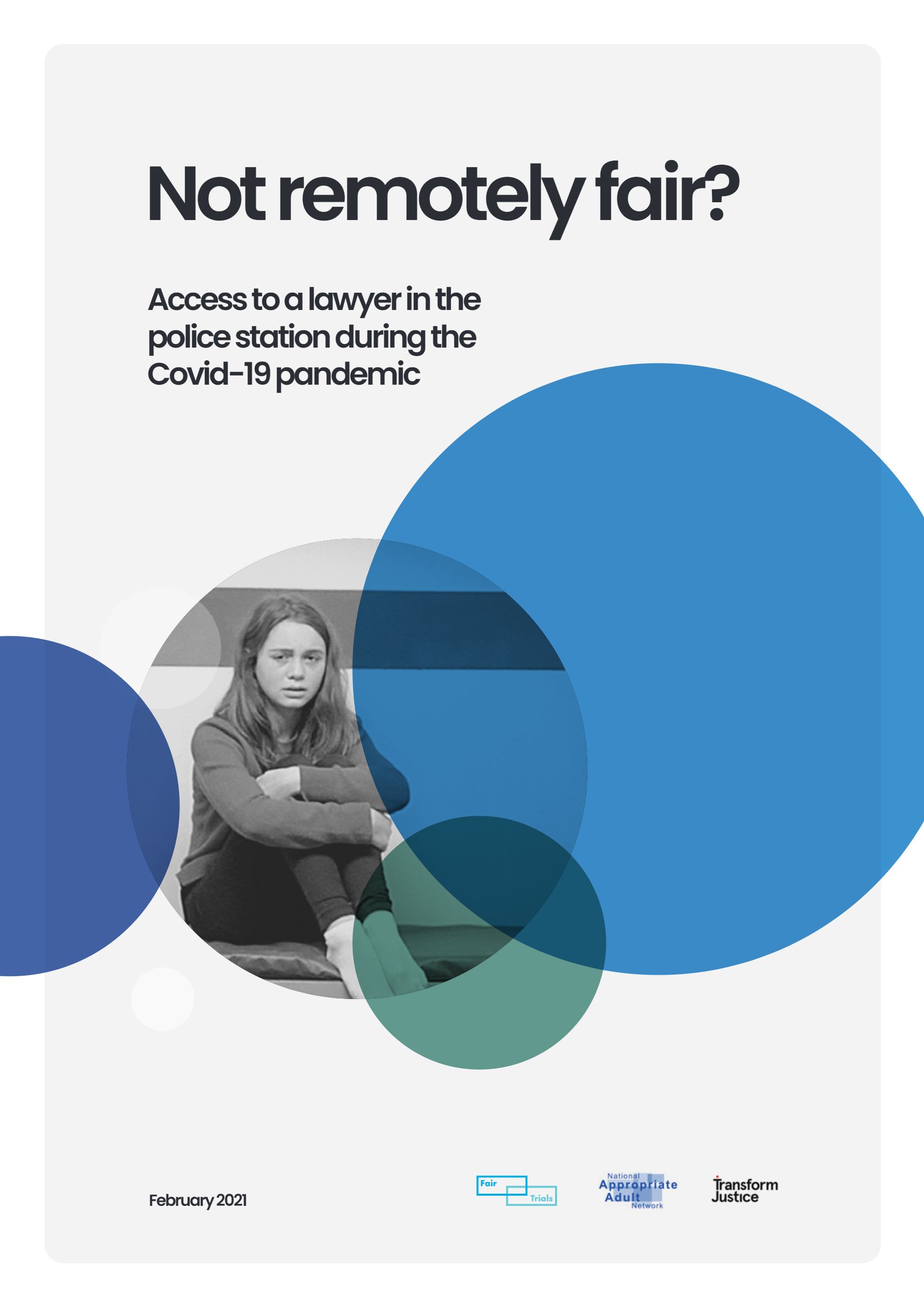
The Covid-19 response to police interviews was well-intentioned but in practice has not delivered a fair process for children or for people with a learning disability, speech and language need, autism, mental illness or brain injury.
While those in police custody have benefited from the continued in-person support of appropriate adults throughout the pandemic, this is no substitute for the invaluable physical presence of a lawyer. Children and vulnerable adults make up only 9% and 5% of arrests respectively. Given this new evidence, it is not logical or proportionate to ignore the existing rules that their legal advice should always be in person. Miscarriages of justice and failed prosecutions serve neither suspect nor victim.
Find out more about our work on this issue using the buttons below.
The appropriate adult (AA) role is challenging, complex and can be risky.
Whether you are a manager, coordinator, commissioner or practitioner, you want to ensure a high-quality service to children and/or vulnerable people.
Effective appropriate adult practice requires high-quality training.
Whether its initial training for brand new recruits or refreshers for experienced practitioners, we can help with a range of appropriate adult training options based on the NAAN and YJB national standards.
The National Training Course (NTC) for appropriate adults was launched in 2024.
The most comprehensive appropriate adult training course available online.
It can be used as a standalone course or integrated with tutor-led and local experiential learning.
10 to 15 hours of self-paced learning.
Engages learners with a mix of animation, video, audio, infographics, interactive activities, text and quizzes.
Regularly updated by the national team.
Course development
Almost two years in the making, the NTC's brand new curriculum was co-created by NAAN (the national standards body) in partnership with Nifty Fox Creative, appropriate adults, AA scheme leaders, training experts, creatives, academics, as well as children and adults with lived experience.
Use the arrows to see our collaborative design process.
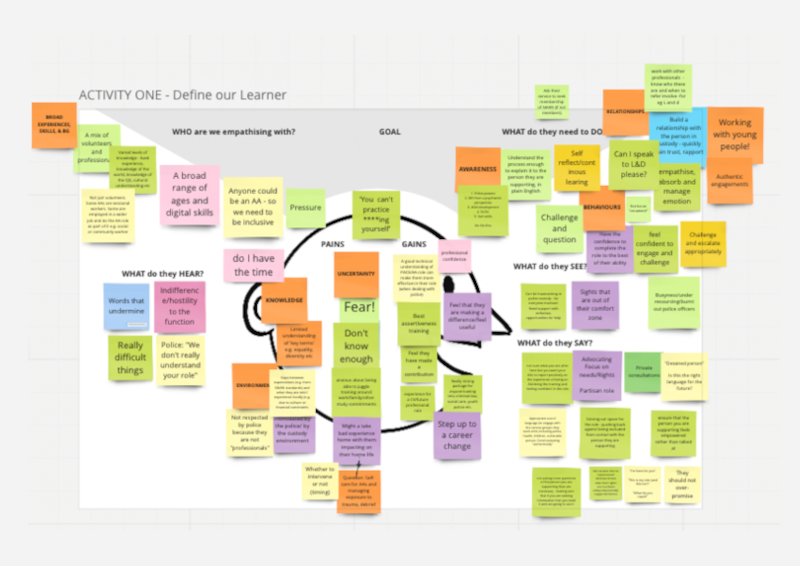
1. The learner
Who are our learners and what challenges do they face?
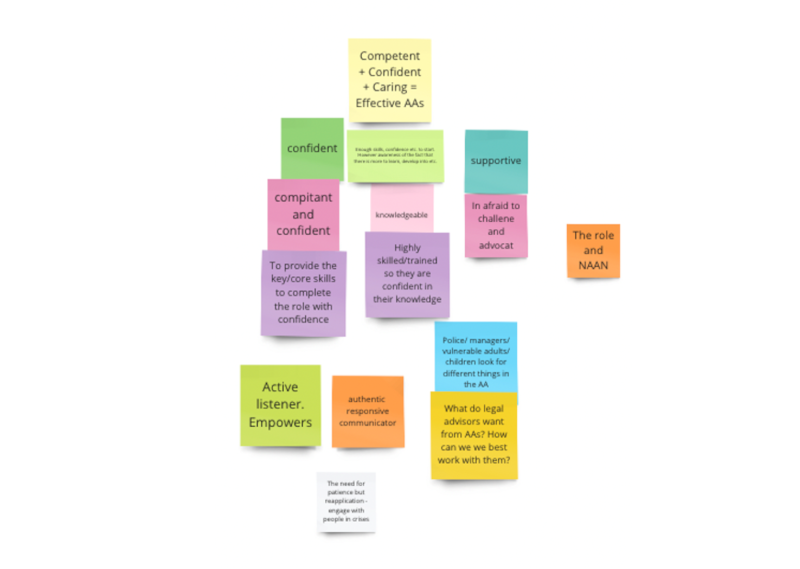
2. Aims
Defining our ideal aim - how would we describe an amazing appropriate adult?
3. Outcomes
What are the key learning outcomes?
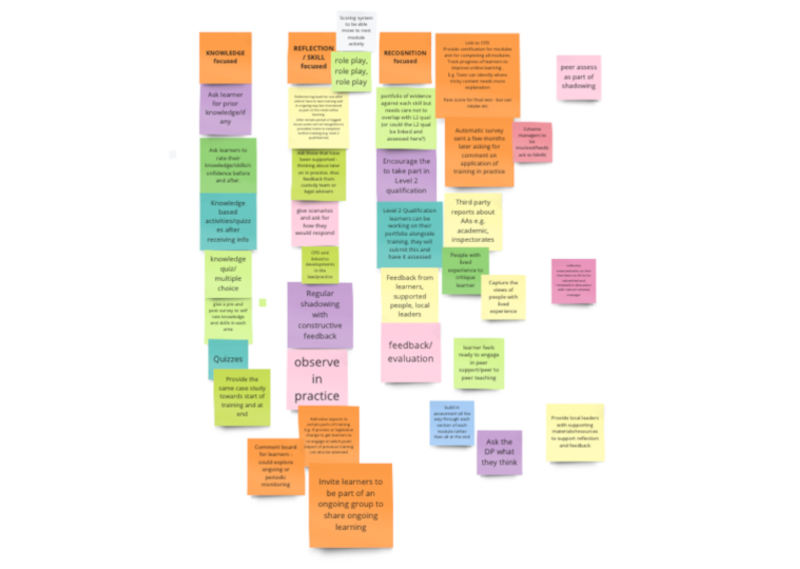
4. Impact
How can the impact be measured?
5. Content
What content needs to be included to achieve the right outcomes for our learners?
6. Design
How do we design the course for engagement and accessibility?
Course content
Discover the National Training Course curriculum
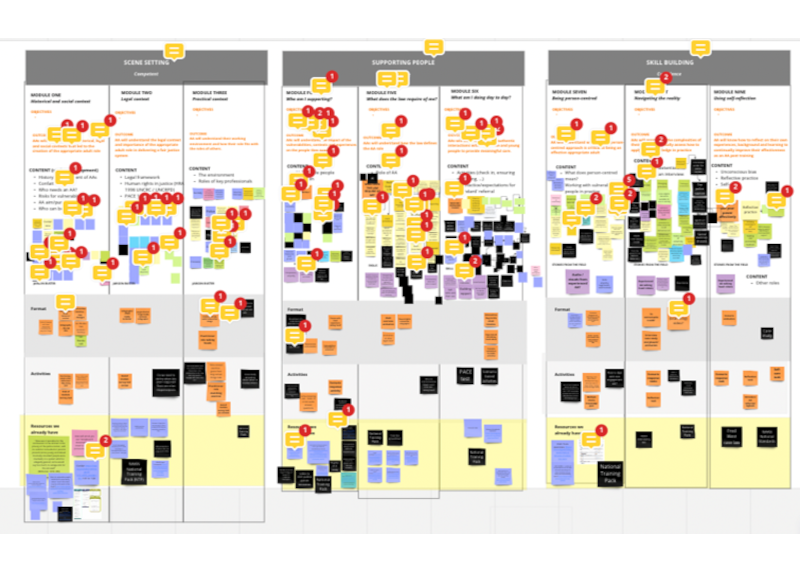
Part 1: Foundations
Why appropriate adults exist
Module 1: Introduction to the AA role
Module 2: The bigger picture
Module 3: Understanding vulnerability
Part 2: Fundamentals
What you'll be doing
Module 4: The practical context
Module 5: What the law requires of you
Module 6: What you will do day to day
Part 3: Further
How to do it
Module 7: Being person-centred
Module 8: Navigating the reality
Module 9: Looking after yourself
Course feedback
We think the National Training Course is great. But don't take our word for it!
Video transcript
"I'm really enjoying the course - the information is well presented and the different delivery methods are effective - I love the videos. It's a huge amount of information to take in (not unexpected) and I'm imagining I'll go back to the beginning and start again once I've finished, to try and consolidate, deepen, and anchor my understanding. Overall - professional, thought provoking, challenging and effective, if a little daunting!"
"I enjoyed doing the course, very informative, also good to refer back to when putting things into practice".
"I really loved it. I thought it was clearly organised. I liked that you could see how big it was and how far you are through it. The quizzes are great! I loved the videos with Grev in - I think it give it that real personal touch to it".
“I thought it was really easy to use and easy to navigate. I like the way you could see as a percentage how far you were through the course. I learned a lot of stuff and I really liked the interactive bits, like the layout of the custody suite and the video. I think that would be really useful for new appropriate adults and I think there's a really good mix of videos and reading”.
"I loved it, really enjoyed it. Even I learnt a couple of bits and pieces, which is absolutely brilliant because every day is a learning day".
"Everything was there. It's very comprehensive".
"The course is an excellent resource as well as a very useful foundation tool for the role. The ability to be guided to further learning and to download information such as the 'outcomes' table is particularly useful".
"I thought it was very good and I can see how it's going to be a very useful tool. I don't think there's any doubt about that".
"Brilliant! I thought it was brilliant. That's the headline".
Course benefits
Select a group to see the key benefits of the National Training Course.
New appropriate adults
A comprehensive foundation
"Success depends upon previous preparation, and without such preparation, there is sure to be failure." - Confucius
Taking on the role of the appropriate adult is a significant challenge, whether you are a volunteer, a sessional worker, or an employee.
The National Training Course:
Provides the confidence that comes from professional-level knowledge
Ensures a solid technical understanding
Prepares you for the gaps between theory and practice
Reduces anxiety
Equips you for continuous learning and reflective practise as an AA.
Experienced appropriate adults
A platform for continuous improvement
"Anyone who stops learning is old, whether at twenty or eighty." - Henry Ford
Continuous learning and reflective practive are the hallmarks of the best appropriate adults.
From changes in the law, to new research findings, the National Training Course is regularly updated with the latest knowledge.
It also provides a shared foundation that supports experienced AAs as they support the development of new colleagues.
Operational leaders
Free up time for experiential learning
"Time is the scarcest resource, and unless it is managed, nothing else can be managed." - Peter Drucker
Enable your team to learn wherever and whenever (without always having to depend on you).
Spend less time repeating presentations about PACE, and more time on engaging local learning experiences.
Combine the National Training Course with custody visits, individual and group supervision, role-plays, and group case discussions, to create lower turnover, and save time and money on recruiting and training new AAs.
Help to shape the ongoing development of the course, through feedback and a national user advisory group (NAAN members only).
Strategic leaders
Demonstrate quality
"Be a yardstick of quality. Some people aren’t used to an environment where excellence is expected." - Steve Jobs
Adopting the National Training Course will :
Demonstrate quality to stakeholders such as commissioners, senior managers, councillors, and the public
Protect and enhance the reputation of your organisation
Stregthen bids for service delivery contracts
Provide evidence for inspections
Increase efficiency, enabling staff to spend more time where they can make the biggest difference
Support improved staff wellbeing
Reduce turnover and recruitment costs
Commissioners
Quality assurance and value for money
"In a world of uncertainty, the best investment is in knowledge." - Michael Bloomberg
Whether recognised in the specification or scoring stages of commissioning, use of the National Training Course:
Provides assurance about the comprehensiveness and quality of initial and ongoing training for appropriate adults
Reduces the significant risks associated with poorly prepared appropriate adults in police custody and voluntary interviews.
Course preview
Click below to try the National Training Course at no cost.
Consider whether NAAN membership would provide even better value.
Bronze members
Pay as you go (5% discount)
Course fee: £190 per learner
Learner access period: 6 months
Call oremail usto let us know what you need and discuss payment options.
We'll provide you with a discounted group code to share with your learners. Your learners can then register themselves using the group booking code option.
Alternatively, please call or email us to discussupgrading to Silver or Gold Membership.
Silver members
Pay as you go (10% discount)
Course fee: £180 per learner
Learner access period: 6 months
Call oremail usto let us know what you need and discuss payment options.
We'll provide you with a discounted group code to share with your learners. Your learners can then register themselves using the group booking code option.
Alternatively, please call or email us to discussupgrading to Gold Membership.
Gold members
Continuous (inclusive)
Course fee: Included in membership fee
Learner access period: Continuous
The benefits of Gold Membership include access to the National Training Course for all your appropriate adult workforce, and at significantly lower cost per person.
With continuous access, everyone in the team will benefit from our ongoing updates to the course, reflecting new legislation, research and guidance.
If you are already a Gold Member organisation, your learners can then register themselves now using the group booking code option.
Tutor-led training
About our tutor-led training
Sometimes you need appropriate adult training that matches your specific needs, delivered with a personal touch.
When we deliver training, it is not just another PowerPoint presentation. We adapt our training to suit your circumstances and needs.
We can deliver remotely (using Zoom or Teams) or in person at your own venue.
We can deliver a fully tutor-led course, or tutor-led sessions that integrate with and reinforce the National Training Course.
Our tutor
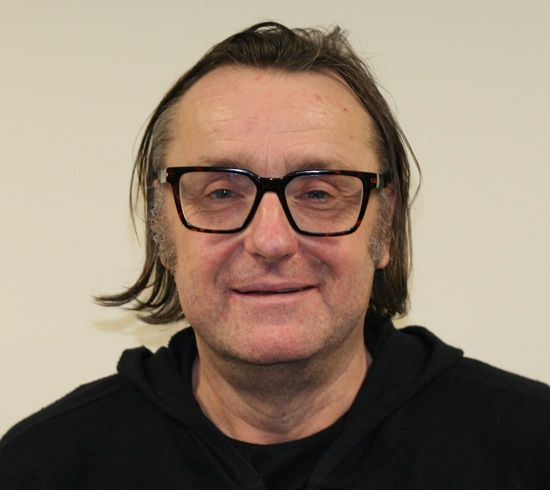
Grev Wallington
Effective Practice Manager (NAAN)
Qualified trainer and facilitator
Delivered AA training to hundreds of staff and volunteers
Managed AA services (children & vulnerable adults) for 20 years
Acted as an AA in 2,000 criminal and terrorism cases.
Content
Our tutor-led appropriate adult training covers the following areas:
Ice-breaking and assessment
Introduction to the appropriate adult role
At the police station
The interview
Summary of key learning
Over the years, we’ve found the biggest challenge in AA training is balancing breadth, depth and interactivity. Learning is most effective when there is time to repeat and reflect on the critical points. Less time usually means more direct presentation (and “More time please!” in learner feedback).
But budgets are limited and training needs to be efficient. So we'll talk to you about your team's existing strengths, share our experience about how to ensure the best learning outcomes, and decide together where to focus the available time.
The National Training Course presents a new opportunity to make the most tutor-led time. Self-guided pre-learning can be combined with sessions led by an experienced tutor, who can answer questions, check learning, and reinforce key messages.
Learner feedback
Professional and accessible
Just wanted to thank you very much for the excellent AA training you provided, everyone I have spoken to who attended was very impressed. It really has equipped me with the information I need and was delivered in such an enthusiastic, professional and accessible way.
Informative and sensitive
Very informative. The trainer was engaging and ensured the development of all students. Covering sensitive topics and modules, the course leader approached the subjects with a great deal of attention and sensitivity which was commendable.
Delivered with humour
Grev was amazing- a really good presenter! Perfect balance between humour and knowledge I feel really comfortable with going into the role now and using everything I’ve learnt. Thank you for a great two days.
Improves practice
It was really useful and certainly aligned to assisting me with my practice and working in my role. I have taken lots away and knowledge has improved as a result.
Enjoyable and detailed
Really enjoyed the training! It was a lot to take in over two days but everything was explained in great detail and will be helpful in the future.
Interesting and in-depth
Very interesting and in depth training.
Lots of great knowledge. 10/10 top notch.
Loved the session
Loved the training session and would definitely recommend it to anyone wanting to become an AA.
Tutor-led training fees
Day rates
When you enquire, we’ll work with you to understand your specific needs, make a recommendation, and be clear about any limitations. The final decision on course duration will be yours to make.
If you'd like to combine tutor-led training with self-directed learning, please also consider the National Training Course information above.
Remote
Up to 10 learners per session
£700 per day (or 2 half days)
£350 for each additional half day
In-person
Up to 20 learners per session
£950 per day
£475 for each additional half day
In-person rates are inclusive of all the trainer's travel, accommodation, food and refreshments expenses.
Drop us a note
We'll be in touch!
**Before you complete the form: If you are interested in becoming a regular appropriate adult for your local scheme, please click here instead of completing this form.**.
“You make my working life have more meaning as I am no longer fighting for people’s rights as an individual, but as part of a much larger group of people within a national recognised organisation.”
Become part of a national network of organisations and individuals committed to a fairer justice system for children and vulnerable adults.
What is NAAN?
NAAN is a charity and membership organisation, working to create a fairer justice system for children and vulnerable adults by maximising the effectiveness of the appropriate adult safeguard.
We provide a centre of expertise and a community for anyone interested in the appropriate adult role.
Gold logo on your website/ letterhead / funding bids
Governance
Attend AGM
Full members only
Vote at AGM
Stand for election to the board
*About professional development day tickets
Remote meetings can be great, but we love getting our members together in person!
Silver and Gold members have the opportunity to book tickets at no additional cost.
Reflecting different membership fees, the number of free tickets varies for individual members (1) and different sizes of organisation, from 2 (small) to 8 (very large organisations)
There is always limited availability due to venue restrictions, so ultimately we can't guarantee that spaces will always be available.
All members are informed that ticket booking is live at the same time via email, and booking is first come first served.
Sometimes we may sell tickets but only if there are spaces remaining after Silver and Gold members have had a fair opportunity to book free places.
What is expected of NAAN members?
The National Appropriate Adult Network (NAAN) is committed to improving both the range and quality of appropriate adult services in England and Wales. In order to do this effectively, we ask all members to operate under the following committments.
Please ensure you have read this information before completing a membership application.
1. Equity, diversity & inclusion
NAAN is committed to equity, diversity and inclusion, as set out in our EDI Statement. By applying for membership, an individual or organisation confirms their commitment to encouraging and enabling equity, diversity and inclusion.
2. Commitment to standards
Members who provide, fund or commission appropriate adult services are expected to be working towards theNational Standards.
We exist to support improvement, and so there is no requirement to be currently meeting all the National Standards.
3. Confidentiality
One of the key tools the network has is the networking opportunities offered to its members through conferences, network meetings and other events. For networking to be effective, members need to be able to share thoughts, concerns, issues and suggestions in an environment of mutual respect and trust. At times, sensitive information about scheme operations or finances may be discussed. By applying for membership, your organisation:
agrees to treat all such sensitive information in confidence
agrees not to repeat confidential information about other schemes outside the network
agrees not to make use of such information directly in the event of seeking a contract in competition with other NAAN members
4. Fair competition
NAAN recognises that provider members may legitimately compete for contracts with other members. By applying for membership, your organisation:
agrees not to make misleading claims about your own service in this process
agrees not to undermine, directly or indirectly, the method of work or professionalism of other members.
What is the membership fee?
We've developed an approach to fees that is underpinned by inclusivity and equity. Fees start at £40 per year for individual bronze membership.
Membership fees vary depending on things like:
your preferred tier (bronze, silver, or gold)
individual or organisational membership
the type and size of your organisation.
To cut through the complexity, just send us an email or provide your deatils in the membership application form below, and we'll explain all your options.
Making an application
Process
Click "Apply for NAAN Membership" below to complete an online application form.
Applications are initially reviewed by NAAN staff.
We may be in touch to gather additional information and answer your questions.
Your membership will be subject to review during the first month (wherein the NAAN Board of Trustees can raise any concerns and not ratify the membership).
Payment
We will ask you to pay the membership fee when you apply for membership.
We will only refund your fee if your application is not ratified by the board (we'll do this as quickly as possible).
So please be certain before applying for membership.
Data protection
We will use the information you provide on our form to process your application.
We may use the information to produce and publish a register of members and to send you relevant information.
We will not pass this information on to any other person(s) without your express consent.
By completing this form you give consent to your contact details being made available to other NAAN members.
By clicking "Apply for NAAN membership" below you agree to your data being used for this purpose.
We host a mixture of online and in-person professional development events.
NAAN members receive up to twofree tickets*to in-person events and can download speaker presentations and videos from the members' section of the website.
Members will be notified of events and how to register via email.
17th February 2022: Webinar for AAs: Making Police Complaints (online)
16th December 2021: AGM 2021 and Professional Development Event: Reflecting on mental capacity in AA practice (online)
8th July 2021: Member meeting: New NAAN strategy and Covid updates (online)
25th May 2021: Member meeting: Covid updates: Remote legal ending for AA clients (online)
13th April 2021: Member meeting: Covid updates: Remote legal and impacts (online)
2020/21
18th January 2021: Webinar for AAs: Remote legal advice: effective AA practice (online)
12th January 2021: Member meeting: Covid updates: Remote legal and guidance (online)
23rd October 2020: AGM 2020 and member meeting: AA Assertiveness (online)
13th and 15th October 2020: Local champions training: Children's Society on disrupting criminal exploitation (online)
9th October 2020: AA training: Children's Society on disrupting criminal exploitation (online)
24th September 2020: Member meeting (online)
30th July 2020: Member meeting: Law Society on remote legal advice during Covid-19 (online)
10th June 2020: Member meeting: NPCC on custody during Covid-19 (online)
15th May 2020: Member meeting: Updated guidance on Covid-19 (online)
17th April 2020: Member meeting: Effect on AA sector of Covid-19 (online)
2019/20
18th December 2019: Professional Development Day and AGM 2019 (London)
12th June 2019: Professional Development Day (Liverpool)
27th February 2019: Professional Development Day (Bristol)
* The total capacity of professional development days (PDD) events is limited. Therefore free PDD tickets are subject to availability. We encourage members to book as early as possible once tickets are available. Members will be alerted by email as soon as tickets are available. On occasion there may be additional tickets for sale. However, members will have an opportunity to book free tickets before tickets go on general sale.
We conduct research where we believe it is needed to maximise the effectiveness of the appropriate adult safeguard, and we are best placed to carry it out. We foucs on contributing to the evidence base on appropriate adult adults and the experiences of children and vulnerable adults.
We work with academics, both directly through our AA Research Community, and through our support for the BSC vulnerability research network which we helped to establish.
Reports
Voluntary Interviews (2023)
Police use of voluntary interview and the application of appropriate adults
In 2014, the Home Secretary commissioned NAAN to undertake research into the availability of appropriate adults for vulnerable adults. Working with ICPR, we reported in 2015.
In future years, we continued to explore the rate at which police identify the need for an AA (using FOI), and the extent to which the sector can meet that demand, while working towards statutory provision of AAs for vulnerable adults.
We secured the inclusion of the police data in national statistics, and continue to analyse and publish this information on our vulnerability tracker.
There to Help (2015)
Ensuring provision of appropriate adults for mentally vulnerable adults detained or interviewed by police (Home Secretary's Commission)